
links


April 8, 1991

‘BE QUICK, BE QUIET, BE ON TIME’

Lockheed Corp.’s secret brain trust emerges from war smelling like roses.

By CHIP JACOBS

Staff Reporter

Untainted by defense scandals, distanced from corporate takeover battles, it lives in the hearts of its "can-do" stalwarts and the minds of America's foes.

When U.S. F-117 aircraft screamed low through a moonless Middle Eastern night, raining laser-guided terror on Iraq's military nerve center in Operation Desert Storm's opening air salvo, Saddam Hussein became a believer.

Lockheed's Skunk Works lives.

Not that Ben Rich, the outspoken engineer who ran the legendary Lockheed Corp. research and development outfit from 1975 to 1990, had any doubts.

"We had a lot of our stuff in the Gulf: F-117's, U-2's, TR-1's. I guess you'd call it tremendous validation," he blurted.

Named after Al Capp's Li'l Abner comic strip five decades ago, the Skunk Works is home to 6,000 who toil in cutting-edge confines from Burbank to Palmdale, and is secretly funded by the Pentagon's "black budget."

Queries about the facility's security precautions, or its work on the $80-billion Advanced Tactical Fighter program or a 21st Century spy plane, are met only with knowing smiles by company officials.

Consider the sleek, V-tail F-117, whose visibility on radar is said to be the equivalent of a small bird. The $42.6 million per copy aircraft was flying seven years before its existence was acknowledged in 1988 - Manhattan Project-like in its secrecy.

Forty-nine years ago, when a circus tent next to a foul-smelling Burbank plastics factory was its temporary base, Skunk Works became a haven for handpicked scientific hotshots whose only constraints were laws of physics and flight chronicled by Isaac Newton and the Wright brothers.

It was - and continues to be - more a state of mind than a network of plants filled with drafting boards, prototypes and wind tunnels.

"Be quick, be quiet, be on time," remains the organization's mantra.

Back in 1943, no one imagined what the Skunk Works would do - the tens of billions it would make for Lockheed, the technological barriers it would dismantle, the Cold War arms race it would chronicle or the platforms of controlled violence it would assemble. No one except for a hardnosed, aeronautical wizard named Kelly Johnson, who died last December, taking a piece of Skunk Works with him.

Since those heady early days, much has changed with the Advanced Development Projects - Skunk Works' formal name. Like the rest of the now wobbly aerospace world, Skunk Works can't escape the new found U.S.-Soviet lovefest, declining military budgets or more mundane environmental regulations. High-speed computers long ago replaced the slide rule as the designer's best friend.

Now a stand-alone division, Skunk Works will relocate its manufacturing operations to a new $39 million facility in Palmdale, leaving the once-sleepy town where it grew up in inconspicuous, unmarked buildings near Burbank Airport.

But Johnson's famous "14 rules" still form its backbone. Top-secret military projects are developed best when they are done with small groups of people working on short productions runs, with minimal red tape and tight contractor-government relations. The idea of KISS - "Keep it simple stupid" - is also attributed to Johnson by Lockheed folk, as was the concept, "Keep all the do-gooders out - including management. They'll help you to death."

Other defense contractors have tried to copy Johnson's creation, but found only limited success. Rich, now a Lockheed consultant, said only one power has effectively taken a page from Skunk Works' management ways: the Japanese.

"It operates with minimum overhead and oversight, permitting it do amazing things in record time," opined Kemper Securities defense analyst Lawrence Harris. "If you want something that has never been done before, the first place to start is the Skunk Works." Last year, the secret organization brought in roughly $800 million to Lockheed's coffers, Harris noted, though it is not the money-maker it used to be.

Johnson was able to spark unconventional thinking by laying down bets with his workers, though he usually won. He said he'd give anyone $100 if they could reduce the weight of the SR-71 by 10 pounds. Rich first suggested filling the tires with helium. When that failed, he recommended giving the pilots enemas.

It was those type of things that gave Johnson the ability to "lead by charisma," according to Rich.

"He didn't tolerate stupidity or lying, but he was generous with praise," Rich explained. "His success was that he asked a lot of questions and got everyone involved early."

Still, Kelly's first task, assigned during the war to end all wars, was hardly a technological breeze: to develop the first operational U.S. jet fighter for the Army Air Corps. With corporate carte blanche, Kelly literally begged, borrowed and stole engineers from other Lockheed World War II projects.

Working almost around the clock for five months, 136 Skunk Work employees completed the P-80 prototype - dubbed the Lulu Belle - 37 days ahead of schedule. Development cost: $9 million, or a measly $124 million in today's money. Nine thousand were eventually produced.

But the next Skunks Works project, a commercial feeder transport called the Model 75-Saturn, bellyflopped. So did the next plane, the turboprop XFV-1, a strange-looking bird that was part helicopter, part plane. Designed to perform vertical takeoff and landing like the modern-day Harrier jet, it was shot down by the Navy, partly because pilots couldn't look over their shoulders to land.

New Soviet threats opened a window of opportunity for Johnson, though.

When the Air Force spotted a MiG-15 fighter over Korea, Skunk Works won the contract to develop the F-104 Starfighter. In less than 12 months Skunk Works built two prototypes able to fly at more than March 2, twice the speed of sound, forging the F-104's name as a "missile with a man in it."

But Skunk Works' real glory was still ahead. When the Air Force needed a high-altitude spy plane, they came to Johnson. With $20 million in convert money funneled through the Central Intelligence Agency, the Skunks Works took 75 people and designed, built and flew the first U-2 in less than eight months. Pentagon officials were even stunned to find Lockheed actually returning $4 million in unused funds.

"Sixteen months after we got the check the U-2 was flying its first mission," Rich gushed. "I can't get a letter out of the Pentagon in that length."

How secret was the U-2?

When Johnson called his test pilot Tony LeVier into a closed-door meeting, he couldn't tell him about the plane he was asking him to try out. When Johnson told LeVier to find a dry lake bed to put the U-2 through its paces, LeVier had to traipse through three states under an assumed name, passing himself off to everyone as a hunter.

On flying the famous plane: "It was basically a huge metal sailplane that took off like a homesick angel," LeVier recalled.

The U-2's furtive mission, and vulnerability to radar tracking, was exposed on May 1, 1960, when Francis Gary Powers was shot down 1,000 miles inside U.S.S.R. territory. The incident put U.S.-Soviet detente into the freezer, fueling Nikita Khrushchev's shoe-pounding, anti-West diatribe at the United Nations.

But the U-2 soon redeemed itself, this time in a superpower showdown that tested the world's nerves.

U-2 pilots spotted the Soviets installing long-range nuclear-tipped missiles in Cuba.

The Department of Defense later ordered a tactical version of the U-2 - the TR-1 - that could find targets behind enemy lines. Decades later, new-generation versions of those frail-looking planes still provide U.S. war planners with information that even the most advanced satellites cannot.

So do three Skunk Work spy planes, designed during the 1960s, able to fly at Mach 3. The most important was the SR-71 Blackbird, a thin delta-winged craft with a 56-foot wing span, a sleek fuselage and the ability to fly altitudes exceeding three miles.

A menacing-looking twin engine reconnaissance aircraft stuffed with photographic and electronic sensors, the Blackbird became an integral part of the military's ability to monitor Third World hot spots and other geopolitical developments.

Not everyone is bullish about the future of organizations like the one Johnson pioneered.

"You are going to see |black' (covert) budget programs under pressure," said Kevin Knobloch, an analyst with the liberal Washington think tank, the Union of Concerned Scientists. "The turning point was the B-2 bomber and the fact that some in Congress thought it was kept under wraps too long."

In the mid-1980s there even was a congressional brouhaha over Skunk Works security procedures, forcing Rich and his staff to go back and classify documents dating back to the U-2.

These days Rich doesn't fret about whether Skunk Works will flourish in the 1990s. He says he is more concerned about America's eroding industrial base, the loss of Lockheeed faithful to Disney Imagineering or the government's "grindstone" military specifications. He's also seen the organization called the gem of Southern California's aerospace world swell from 14 departments in 1965 to more than 200 now.

"There will always be niches to fill in for the military and we'll keep asking them what they will need in the next century. Remember, there are only 3,000 days left in this one."

copyright Los Angeles Business Journal

Money Train, published in Los Angeles City Beat. Why would U.S. Congressman Ernest Istook from Oklahoma come to Los Angeles to raise money? Perhaps because he holds the purse strings to critical federal transportation dollars.
March 10, 2005

MOVING DOWN THE ROAD, Pasadena Weekly
http://chipjacobs.com/a_movingdown.html
Moving Down the Road, published in the Pasadena Weekly. The Caltrans 700,000 square-foot tower owes its existence to the 1994 Northridge earthquake, union muscle, and a tincture of politics.
July 10, 2003

TUNNEL VISIONS, Pasadena Weekly, Caltrans Tenants Association
http://www.caltranstenants.com/tunnel.html
Tunnel Visions, published in Pasadena Weekly. Caltrans may dig deep to find a way out of its 710 Freeway debacle.
(Part III of Corridor of Shame series)
May 22, 2003

THE UNTOUCHABLES, Pasadena Weekly, Caltrans Tenants Association
http://www.caltranstenants.com/slumlord.html
The Untouchables, published in Pasadena Weekly. Slumlord Caltrans uses legal immunity to hold tenants and the cities of Los Angeles, Pasadena, and South Pasadena at bay, as long-needed repairs to homes the agency owns along the proposed 710 Freeway route fester. (Part II of Corridor of Shame series)
May 15, 2003

NO EXIT, Pasadena Weekly
http://chipjacobs.com/a_noexit.html
No Exit, published in Pasadena Weekly. Once stately properties that Caltrans bought 30 years ago to complete the still unfinished Long Beach 710 Freeway stand as a testament of neglect by one of the most powerful agencies in California. (Part I of Corridor of Shame series)
May 8, 2003

SOME MTA DRIVERS GET PHYSICAL, Daily News of Los Angeles
http://chipjacobs.com/a_mtadriversphys.html
Some MTA Drivers Get Physical, published in Daily News Los Angeles. Attacks on Metropolitan Transportation Agency riders not always punished and nearly 20 cases remain unsolved or lost due to poor record keeping.
June 24, 1996

SUBWAY TUNNEL WALLS AT RISK, REPORT WARNS, Daily News of Los Angeles
http://chipjacobs.com/pdfs/subwaytunnelwallsatrsk1.pdf
Subway Tunnel Walls at Risk, Report Warns, published in Daily News Los Angeles. Just three years after the first segment of the Metro Red Line was opened at a cost of $1.45 billion, the Army Corps of Engineers says the subway’s concrete walls are at risk of being eaten away by chemical-laced ground water.  MTA officials say water-damage threat small. 
April 11, 1996

MTA SPENT BIG TO SUGARCOAT TUNNELING, Daily News of Los Angeles
http://chipjacobs.com/pdfs/mtaspentbig1.pdf
MTA Spent Big to Sugarcoat Tunneling, published in Daily News Los Angeles. During the 1994 holiday season, the Metropolitan Transportation Agency spent about $400,000 in public funds to bring a Yule-tide bonanza to Hollywood boulevard. Opponents say humbug to mitigation efforts, labeling it as pork barrel or misguided.
September 24, 1995

HOMES OWNED BY CALTRANS NOT KEPT UP, RECORDS SHOW, The Los Angeles Times
http://chipjacobs.com/a_homesowned.html
Homes Owned by CalTrans Not Kept Up, Records Show, published in The Los Angeles Times. Dozens of homes the state acquired along the un-built Long Beach (710) Freeway pathway sit in such disrepair they either can’t be leased or whip up renters’ complaints about slumlord practices. Twenty-seven homes still part of the holdings are not even needed to construct the long-delayed project. Caltrans defends maintenance.
April 26, 1995

CALTRANS MISSED SAFETY DEADLINE, San Gabriel Valley Tribune
http://chipjacobs.com/pdfs/caltransmissed1.pdf
CalTrans Missed Safety Deadline, published in  the San Gabriel Valley Tribune. Despite a legally etched state deadline, Caltrans missed a key deadline to strengthen more than 1000 freeway bridges, including most of the structures crippled in the Northridge earthquake. Bridge contracts overdue.
February 4, 1994

PROBLEMS PILE UP ALONG METRO LINE, San Gabriel Valley Tribune
http://chipjacobs.com/pdfs/problemspileupmetro1.pdf
Problems Pile up Along Metro Line, published in San Gabriel Valley Tribune. First came the charges of shoddy construction. Then the claims of massive cost overruns.  Now more troubles are brewing for Los Angeles’ new subway:  wage violations against workers actually building the Metro Red Line.
October 16, 1993

FREEWAY WORK: A PERILOUS PAYCHECK, San Gabriel Valley Tribune
http://chipjacobs.com/pdfs/freewayworkperilouspaycheck1.pdf
Freeway Work: A Perilous Paycheck, published in San Gabriel Valley Tribune. Caltrans workers face death everyday and Caltrans needs to further protect its exposed maintenance crew.
Sept. 4, 1993

TRANSIT COMMISSION AUDITORS CAST EAGLE EYE ON TUTOR’S COSTS, Los Angeles Business Journal
http://chipjacobs.com/a_transit.html
Transit commission Auditors Cast Eagle Eye on Tutor’s Costs, published in Los Angeles Business Journal. Los Angeles County Transportation Commission auditors are questioning tens of thousands of dollars in overhead expenses that powerhouse Metro Rail contractor Tutor-Saliba Corp. submitted two years ago, according to a preliminary audit obtained by the Business Journal.
September 28, 1992

METRO RAIL COST-OVERRUN TAB ADDS TO CITY HALL FISCAL WOES, Los Angeles Business Journal
http://chipjacobs.com/a_metrorail.htm
Metro Rail Cost-Overrun Tab adds to the City Hall Fiscal Woes, published in Los Angeles Business Journal. The City of Los Angeles is on the hook to pay $100 million in Metro Rail Red Line construction overruns under a little-known cost-sharing deal with the Los Angeles County Transportation Commission.
March 16, 1992

Title: The man
URL: http://www.chipjacobs.com/wd_theman.html

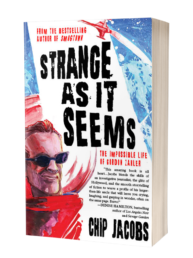
Almost broke, living on handouts with his mom in a shabby apartment outside post-war Los Angeles, Gordon Zahler, a paralyzed kid in his mid-twenties got an idea. He'd re-sell the music of a dead man -- the music his father, Lee Zahler, composed during his workhorse career in early Hollywood. Within a few years, mother and son would be working for MGM on a Doris-Day romp and for Hollywood's most beloved hack, Ed Wood Jr., on Plan Nine from Outer Space. A decade later they had a house above the Sunset Strip in a comeback story too farfetched for any screenplay.


Home | Book News | About Chip | Musings & Miscellaneous | Articles | Reporting Accomplishments | Contact | Pasadena
The Book --> Wheeling the Deal | Visual Timeline | The Man | The Career | Gallery of Images | Links | Buy The Book

All Information contained on this web site are copyright protected 2006©
Contact Chip Jacobs for reproduction rights.


Site Designed by JUNGLE 8/ creative